Thailand leads ASEAN in AI usage as readiness gap sharpens focus
วันที่นำเข้าข้อมูล 24 มี.ค. 2569
วันที่ปรับปรุงข้อมูล 24 มี.ค. 2569
Thailand has quietly become Southeast Asia’s most enthusiastic adopter of artificial intelligence, with new regional research showing the Kingdom leading ASEAN in everyday AI usage, especially among students and teachers.
According to the latest ASEAN Digital Outlook and AI Ready ASEAN Research reports, more than 90% of Thai students and over 80% of teachers now use generative AI tools regularly, often for writing, summarizing, design, and other creative tasks. Researchers say that level of integration suggests an “AI-native” workforce is already taking shape.
The momentum also extends beyond classrooms, with surveys indicating that AI has become an almost invisible part of daily life for many Thais, used for translation, tutoring, creative work, analytics, and customer service. In workplaces, adoption is rising quickly, with companies increasingly treating AI skills as a hiring advantage and using automation in recruitment and operations.
Taken together, the numbers paint a picture of a nation moving rapidly to embrace the technology and potentially setting the pace for the rest of ASEAN.
The readiness gap and paradox
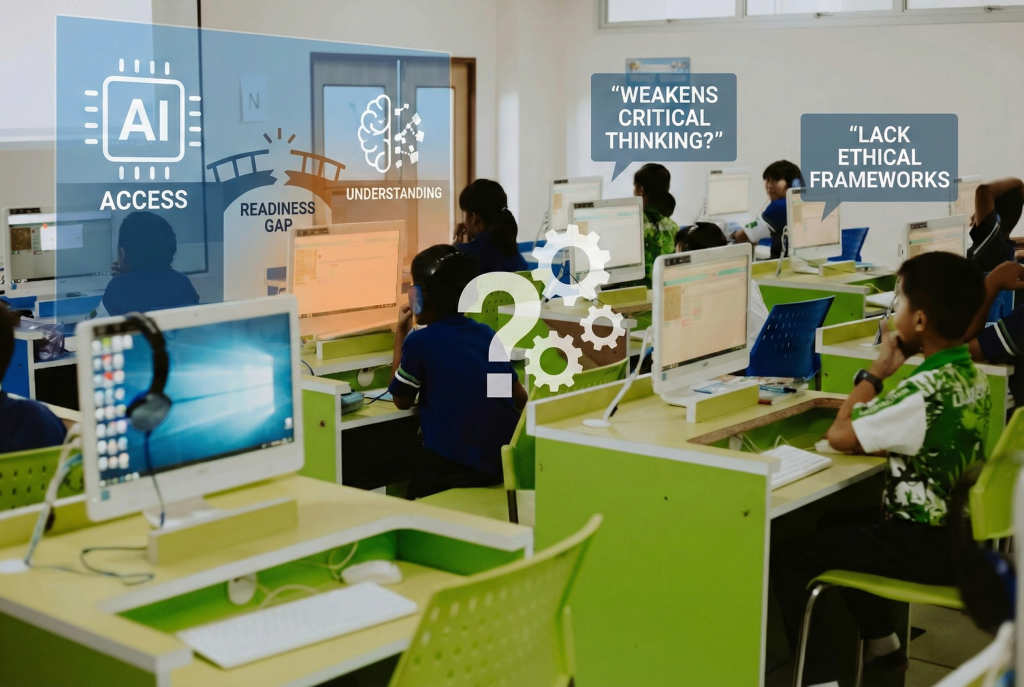
Notably, the same studies highlighting Thailand’s nevertheless also warn of a widening gap between usage and understanding.
Experts say many educators, parents, and institutions lack training, confidence, and ethical frameworks for managing AI responsibly. Concerns are also growing that heavy reliance on AI tools, particularly in education, could weaken critical thinking and problem-solving skills over time.
Dr. Piti Srisangnam of the ASEAN Foundation argues that the conversation must now shift from access to governance. The question, he says, is no longer whether AI will be used, but whether societies are prepared to guide it responsibly.
Technology advocates are echoing this view, with Marija Ralic of Google.org APAC noting that access alone is not enough and that real readiness requires understanding how AI systems work, their limitations, and their broader societal impact.
Risks in an accelerating ecosystem

The reports also point to emerging risks that could undermine trust in digital systems if left unchecked. Among the most pressing concerns are deepfakes, online scams, misinformation, and data-privacy breaches that are already becoming more visible across the region.
Cybersecurity weaknesses, fragmented regulations, and uneven digital skills remain structural challenges not only for Thailand but for many ASEAN economies. Without clearer governance and stronger institutional support, analysts warn that widespread adoption could outpace the safeguards needed to manage it.
Researchers are warning about the economic implications, cautioning that future workers who rely heavily on AI tools but lack deeper analytical skills could struggle with complex problem-solving, potentially slowing productivity gains.
Chasing the $1 trillion digital economy

The stakes are high as ASEAN’s digital economy is projected to reach US$1 trillion by 2030, and policymakers see responsible AI deployment as central to achieving that goal. With nearly a third of the region’s population under 20, education systems are likely to play a decisive role in shaping how effectively AI is used in the future workforce.
Initiatives to close the readiness gap are already underway, including regional digital-literacy programs that have trained millions of people and thousands of community instructors. Still, experts say scaling those efforts and embedding ethical standards into everyday use will be the real readiness test.
For now, Thailand stands as one of the clearest case studies of what mass AI adoption looks like in practice when it’s fast, enthusiastic, and full of promise, even as the nation struggles with how to ensure the technology strengthens society rather than outpaces it.
source :
.png)
Thailand Trade and Economic Office (Taipei)
| เวลาทำการ |
วันจันทร์ - ศุกร์ | 9:00-12:00, 14:00-17:00 |
|
| 🕿 | บริการคนไทย | (8862) 2775 2211 |
| Thai Visa | (8862) 2773 1100 | |
| 🖷 | Fax | (8862) 2740-3300 |
| 🖅 | General Affairs | [email protected] |
| บริการคนไทย | [email protected] | |
| Thai Visa | [email protected] | |