Thailand accelerates net-zero shift with EVs, charging stations
วันที่นำเข้าข้อมูล 24 มี.ค. 2569
วันที่ปรับปรุงข้อมูล 24 มี.ค. 2569
In the wake of increasingly severe floods, storms, and climate-related disruptions that have caused tens of billions of baht in economic damage, the Thai government has officially moved its net-zero emissions target forward by 15 years, from 2065 to 2050.
The shift reflects growing recognition that climate instability poses direct risks to national growth, infrastructure, and long-term competitiveness.
Officials are now framing decarbonization more in terms of economic risk management than environmental protection, arguing that preventive investment is significantly cheaper than repeated disaster recovery.
Building low-carbon communities

The National Research Council of Thailand (NRCT) has elevated “low-carbon communities” into a key mechanism of national climate policy. Through pilot programs and academic-government partnerships, authorities are deploying practical tools to translate climate goals into everyday behavior, from energy-efficient appliance usage to low-emission agricultural practices and waste reduction.
More than 300,000 environmental protection volunteers are already helping implement policies nationwide, effectively turning climate transition into a decentralized civic movement.
A newly expanded “nine-step ladder” assessment model measures how communities progress from climate awareness to fully sustainable systems. This approach is intended to scale nationwide through local administrations based on the philosophy that national transformation begins with household decisions.
Thai taxis lead EV adoption

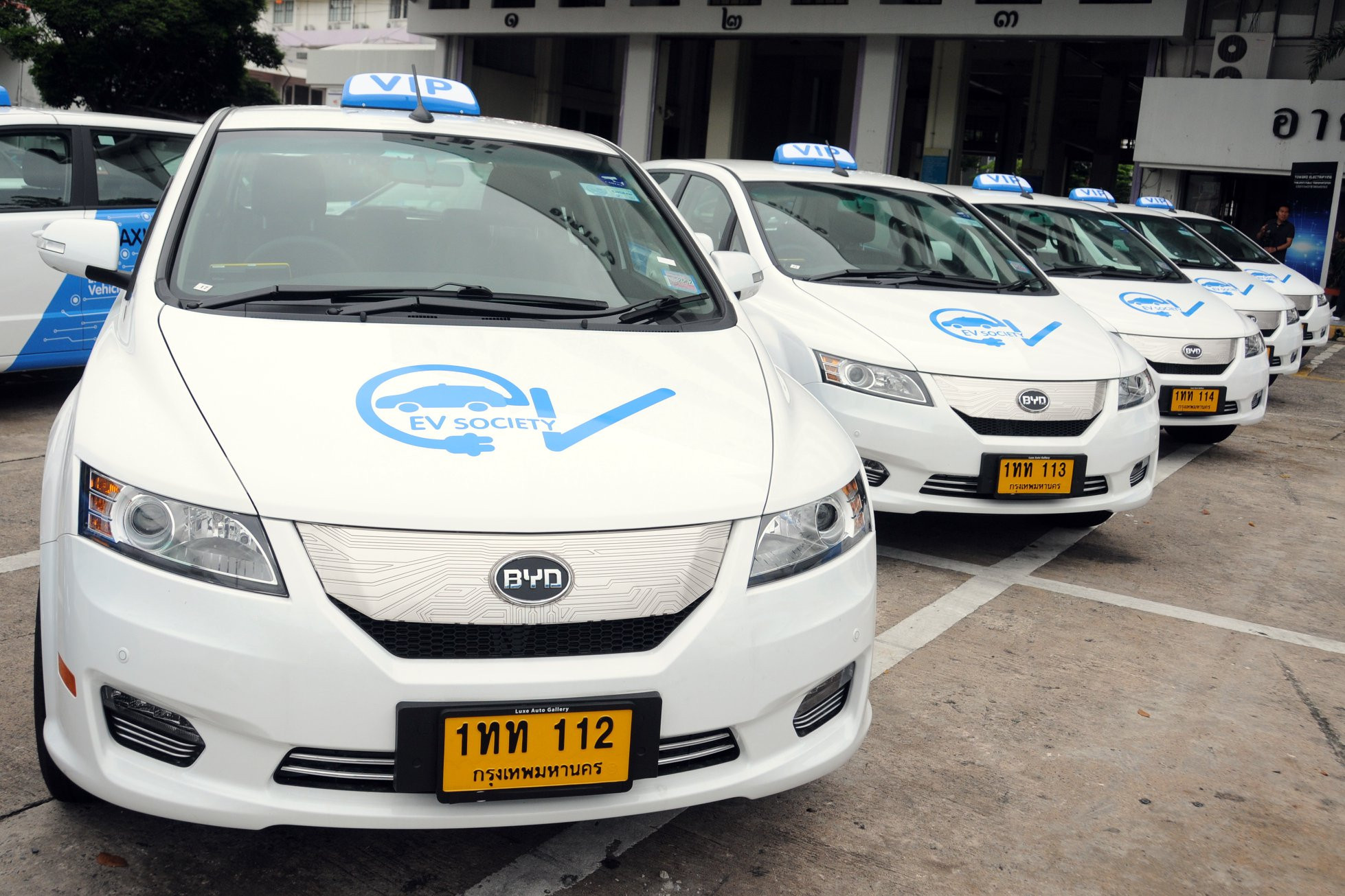
As community programs shape social change, Thailand’s transportation sector is rapidly driving emissions reductions at industrial speed.
Nowhere is the transition clearer than in urban mobility, with battery electric vehicles (BEVs) accounting for 97% of new taxi registrations in January 2026, up dramatically from 75% just a year earlier. Analysts now expect electric taxis to capture roughly 88% of the total taxi market this year, achieving a structural shift in only a few years.
Falling electricity costs and a 22% expansion in charging infrastructure have sharply reduced operating expenses, convincing drivers that electrification is no longer experimental but financially rational.
Bangkok is extending the model further through pilot programs helping motorcycle taxi riders switch to electric bikes, a move projected to cut operating costs by up to sevenfold while reducing urban air pollution and carbon emissions.
Infrastructure and next-phase electrification

Additionally, Thailand is laying regulatory groundwork to sustain momentum. New national standards for EV charging stations and hydrogen fuel systems aim to prevent fragmented infrastructure while also attracting long-term private investment.
Under the government’s “30@30” policy, electric vehicles are targeted to make up 30% of total auto production by 2030, positioning Thailand as a regional EV manufacturing hub aligned with global low-carbon supply chains.
Industry leaders increasingly argue that the next phase will depend less on subsidies and more on structural incentives, including dedicated EV lanes, stricter emissions standards, and expanded charging access.
Growth and green transition converge
Economic data suggests the climate pivot is already reshaping Thailand’s growth model. A late-2025 surge in private investment, partly fueled by EV incentives, helped push quarterly GDP growth to 2.5%, alongside a boom in spending on durable goods and industrial equipment.
Crucially for Thailand, this means the path to net zero is also becoming one of industrial renewal.
As climate risks intensify across Southeast Asia, Thai policymakers are betting that cleaner transport, standardized energy systems, and empowered communities can turn environmental urgency into long-term economic resilience, thereby redefining development for the carbon-constrained decades ahead.
source :
.png)
Thailand Trade and Economic Office (Taipei)
| เวลาทำการ |
วันจันทร์ - ศุกร์ | 9:00-12:00, 14:00-17:00 |
|
| 🕿 | บริการคนไทย | (8862) 2775 2211 |
| Thai Visa | (8862) 2773 1100 | |
| 🖷 | Fax | (8862) 2740-3300 |
| 🖅 | General Affairs | [email protected] |
| บริการคนไทย | [email protected] | |
| Thai Visa | [email protected] | |